
Reviewed · OLD SAN JUAN
Old San Juan Tour in Spanish
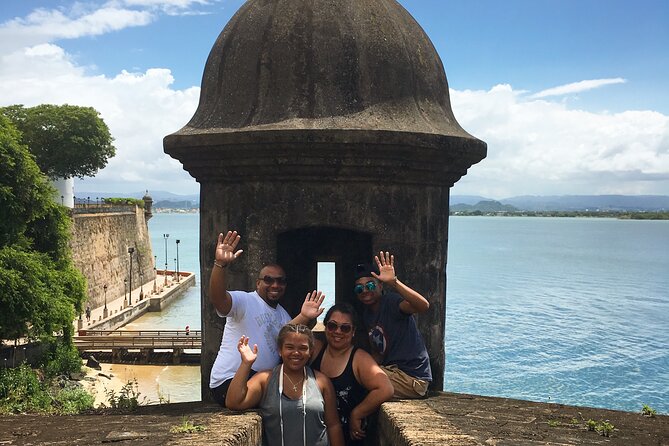
Old San Juan in Spanish is a smart, low-stress way to get your bearings in Puerto Rico’s oldest walled city. The 12:30pm tour is Spanish-only, starts at Plaza Colón, and moves at a human pace along cobblestones and colorful streets while you learn what the walls were for and who tried to take the city. It’s the kind of walk that helps you see Old San Juan as more than postcards.
Two things I especially like about this tour are how you get context fast, and how it stays practical in the middle of real city life. First, the route strings together the big landmarks you expect, plus the smaller story markers like church founding dates and gate details, so your photos come with meaning. Second, the experience is run as a careful group walk, with a maximum of 20 people, and the guide keeps checking that everyone is doing OK along the way.
One consideration: this is mostly a “see it from the street” format. You do not enter either of the major castles, and some churches only get entered if the space is empty or only a few people are there, so plan on outside viewing and short stops rather than long inside time.
Key highlights that make this Old San Juan tour worth your time
- Spanish-only at 12:30pm for a more natural feel if you want the city in its own language
- Max 20 people, so you can actually ask questions and stay with the group
- Daniel Rivera Viruet’s calm, attentive style, including checking in and pausing for questions
- Church stops with respect rules, enter only when it is quiet, never interrupt prayers
- Major fort and gate sights without castle tickets, then you can choose to return later
The payoff of choosing the 12:30pm Spanish-only option
Old San Juan is a compact place, but it’s also layered. You’re moving through more than 500 years of changes, from Spanish planning to later conflicts with pirates and privateers who wanted a foothold. A Spanish-only guide keeps the flow tight, and you’re less likely to miss the little cause-and-effect details, like why Spain built a walled city in the 1500s and how that design shaped everything inside the walls.
If you want a tour that feels like you’re walking with a local storyteller, this one is a great match. The route is built around major landmarks and the in-between streets that connect them, including the cobblestone lanes that make Old San Juan memorable in person. And since it’s offered at 12:30pm in Spanish, it can fit nicely into a day when you want the morning free for beach time or other plans.
More Old San Juan walks:
- Old San Juan Walking Tour
★ 5.0 · 2,211 reviews - Old San Juan City Walking Tour
★ 5.0 · 1,718 reviews - Historic Old San Juan Sunset Walking Tour
★ 5.0 · 634 reviews
Price and value: what $30 buys in real time
At $30 per person for about 2 hours, the value is less about squeezing in every possible site and more about getting the story straight while you walk. The stops are organized so you learn key context before you see the next landmark. That sequencing matters, especially at places like forts and gates, where the architecture looks impressive but can feel confusing without a guide explaining function.
You also get practical structure: a set start point at 407 C. de San Francisco and a tour that ends back at the meeting area. The tour uses a mobile ticket, which keeps things easy on the day. With a group limit of 20, it doesn’t feel like a crowded herd, which helps if you plan to stop for photos and still keep moving at a reasonable pace.
The “not entered” castle format is the trade-off. You will see Castillo de San Cristóbal and Castillo San Felipe del Morro from the tour route, and if you want to go inside, you can do that afterward with the regular entrance. For many people, this is the right balance: you get the wow factor plus context in the two-hour window, then you decide later how deep you want to go.
Where you start at Plaza Colón, and why that matters
You meet at Plaza Colón, 407 C. de San Francisco. The guide starts with a brief introduction right here, setting up why Spain built a walled city and what that meant for daily life in the streets you’ll soon be walking.
Plaza Colón is a good “first chapter” because it positions you in the mental map of Old San Juan. You’re not wandering. You’re building a framework: walls, defense, key sites, and the way the city’s layout pushes you toward the bay, the forts, and the gates. It’s also where you can get your questions answered early, which makes the rest of the walk feel smoother.
Stop-by-stop guide: what you’ll see and what to look for
A few more San Juan days to compare
- San Juan Guided Snorkel With Turtles Tour and Videos
★ 5.0 · 12,947 reviews - Top Rated El Yunque Rainforest & Waterslide – SmallGroup Tour
★ 5.0 · 12,789 reviews - Night Kayak – Condado City Lights Tour
★ 4.5 · 4,807 reviews - Authentic Flavors of San Juan Food Tour
★ 5.0 · 4,741 reviews
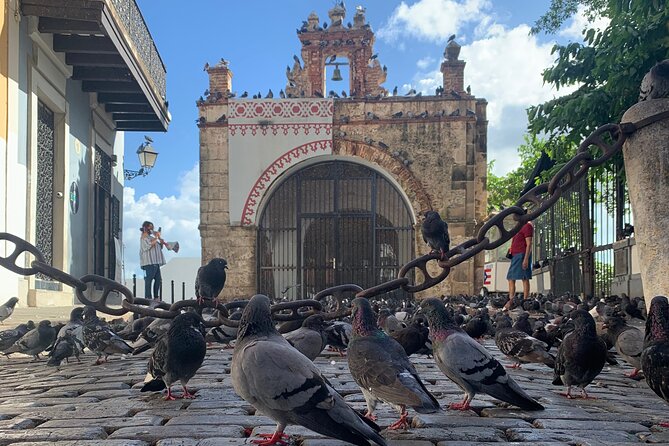
Parroquia San Francisco de Asís (1756), and how churches shape the streets
One of the first story stops is Parroquia San Francisco de Asís, a church founded in 1756. The guide shares history and details, with one important practical rule: you only enter if it’s empty or there are only a few people, and you cannot interrupt people who are praying.
I like this approach. It respects the space, and it also keeps the tour from turning into a constant stop-and-start routine. When you do enter, you’re getting a quieter window into how religious buildings anchor the neighborhood rather than just being “a photo stop.”
Castillo de San Cristóbal: the big defensive statement you view from outside
Next comes Castillo de San Cristóbal, described as the largest castle built in America to defend the city. This is one of those stops where the exterior alone can still feel dramatic, especially if you pay attention to how the structure relates to the surrounding defense logic.
You won’t enter. The guide keeps this to about a short visit, and you can return later if you want the full castle experience. That works well if you want your two-hour tour to stay focused and not get eaten by ticket lines and longer indoor time.
Calle San Sebastián: cobblestones plus the island’s calendar
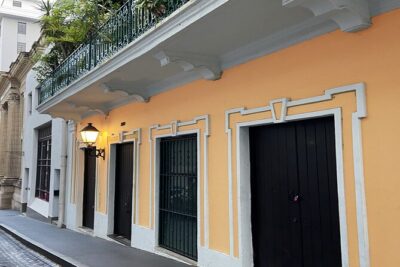
Then you walk into Calle San Sebastián, known for cobblestone streets and colorful buildings. The guide points out that this is where Puerto Rico’s largest festival is celebrated in January.
Even if your trip is not in January, this stop gives you a feel for how Old San Juan shifts with the seasons. Look up as you walk. In narrow streets like this, balconies and building angles affect sightlines, and photos tend to look better when you frame the street rather than just the facade.
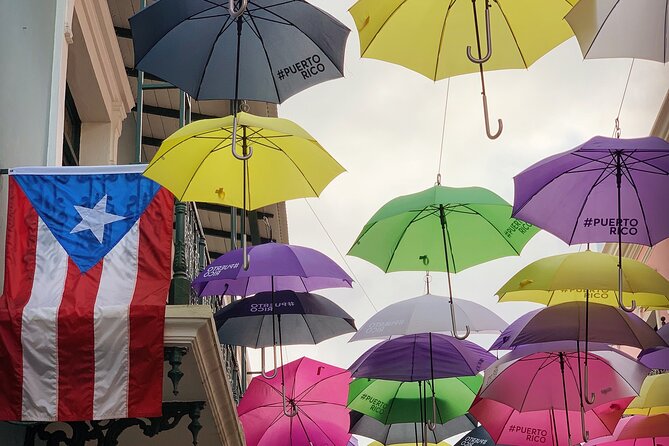
La Puerta de la Bandera: a history lesson built for photos
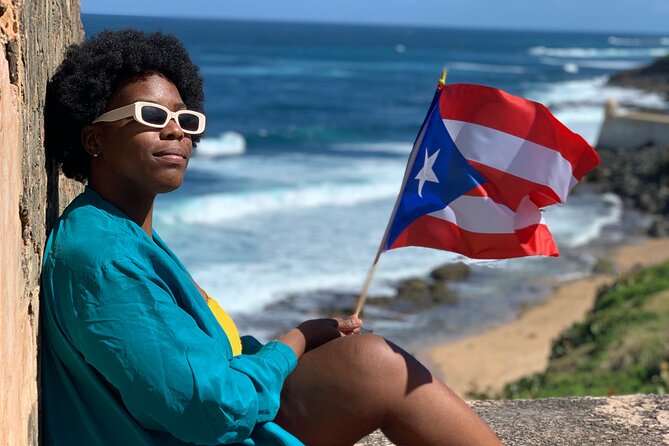
La Puerta de la Bandera is a quick stop, but it’s a good one. You learn about the Puerto Rican flag and how it has changed over time, and you can also take photos at the location.
If you like your photos to mean something, this stop is useful. It also breaks up the longer stretches of walking with a spot that’s easy to enjoy without rushing.
Iglesia de San José (1532): old dates and quiet entry rules
Iglesia de San José is tied to an early 1532 timeline, and the guide shares what it means historically. As with the other churches, entry only happens when it is empty or has only a few people, and you cannot interrupt worship.
This matters because it helps you avoid that awkward feeling of standing in the doorway while people are trying to pray. It also means the guide has a thoughtful rhythm, where the group doesn’t barge into sacred space.
The old cemetery near the beach and Castillo del Morro
At one point you stop at an old cemetery located on the edge of the beach, near Castillo del Morro. The guide explains its history, and that location adds an extra layer. Being near the water changes how you perceive the site. It feels less like a random stop and more like part of the city’s long relationship with arrival, defense, and life by the shore.
Cuartel de Ballaja: where Spanish soldiers lived
You then reach Cuartel de Ballaja, a place where Spanish soldiers lived. The guide shares history tied to daily life behind the walls.
This stop is especially good if you enjoy practical details, like how accommodations work when you’re supporting a defense system. It also gives you a moment to reset, and the tour includes a bathroom break if available.
Castillo San Felipe del Morro (1539): another fortress without tickets inside
Castillo San Felipe del Morro is built in 1539 to defend the entrance to the bay. Like Castillo de San Cristóbal, you do not enter during the tour, but you get the learning piece and the outside views that show why the location is so strategic.
This is one of the stops where your earlier explanations start clicking. Once you know what the guide is pointing at, you can see the relationship between bay access and defense logic, even without walking inside.
Plaza del Quinto Centenario (1992) and the Telluric Totem
Next is Plaza del Quinto Centenario, built in 1992 to celebrate 500 years since the discovery of America. You’ll also learn details hidden in the plaza, including the location of the Telluric Totem made by artist Jaime Suárez.
I like this stop because it stops the tour from being only “colonial past.” It gives a bridge to how later generations remember the city and mark the timeline in public space. Even if you don’t know much about the totem or the design, the guide’s explanation helps you see why it was placed where it was.
The door of San Juan Bautista: a main gate story
You then visit the door of San Juan Bautista, one of the main gates of the walled city. Expect another quick but meaningful history stop, tied to how gates worked as controlled entry points.
If you want to understand how cities defend themselves, gates are where the big idea becomes physical. After this, you’ll start noticing where the city’s layout guides movement and why certain routes matter.
La Rogativa: bay views and a pause worth taking
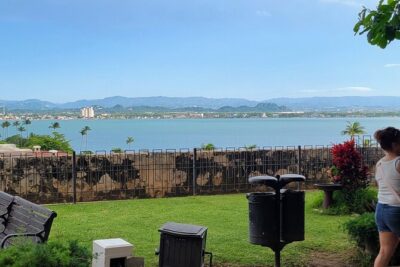
La Rogativa is a longer view stop, about 15 minutes, with a walk that gives you San Juan Bay scenery. From here you can see part of Juan Ponce de León’s house.
The guide explains the Rogation, tying a place name to a story rather than leaving it as a label. This is also a great point to slow down for photos. Cobblestones can get tricky, so take your time placing your feet and holding your phone steady.
Juan Ponce de León house (1521): learning without entering
You learn about the House of Juan Ponce de León from its 1521 timeline, but you do not enter. Entrance is not part of the tour, and you can visit later if you want.
This is a good approach for most people. It keeps the two-hour timing intact while still giving you the “who” and “when” behind one of the most famous names tied to early Puerto Rico.
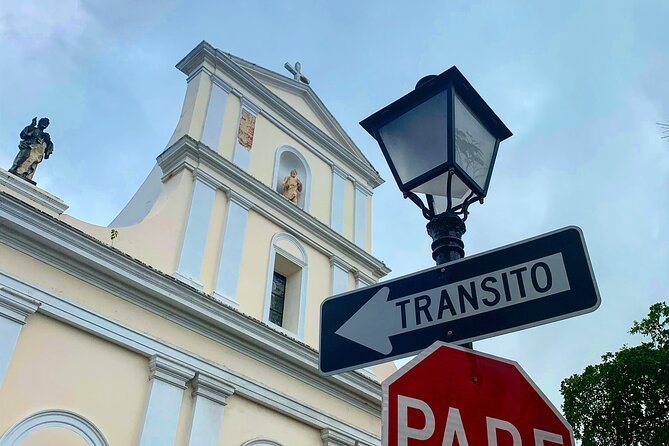
The oldest church in Puerto Rico (1521): quiet entry, big meaning
Next you’ll reach the oldest church in Puerto Rico, tied to 1521. Again, entry only happens if it is empty or only has a few people, and you cannot interrupt anyone praying.
This stop often lands well because it closes a loop. Earlier you learned about walls and defense, and now you’re seeing how faith and institutions grew roots early. Even without long time inside, the date alone can change how you look at the street.
Calle de la Fortaleza: the main street you’ll want to keep walking after
You end with Calle de la Fortaleza, the main street of Old San Juan, where you’ll find shops, restaurants, craft stalls, and galleries. It’s a short stop, about 5 minutes, but it’s a useful handoff to independent time.
If you love wandering, this is your signal to loosen your schedule and explore at your pace.
Capilla del Santo Cristo de la Salud: tour end and a good lunch launch point
The tour ends at Capilla del Santo Cristo de la Salud. From here, you can continue walking along Fortaleza Street for lunch or to visit shops.
In practice, this ending works because it drops you where you can actually use the energy you’ve built during the tour. You’re not ending in the middle of nowhere. You’re ending on a street made for food stops, browsing, and easy next steps.
What I think the best guided moments are, and why
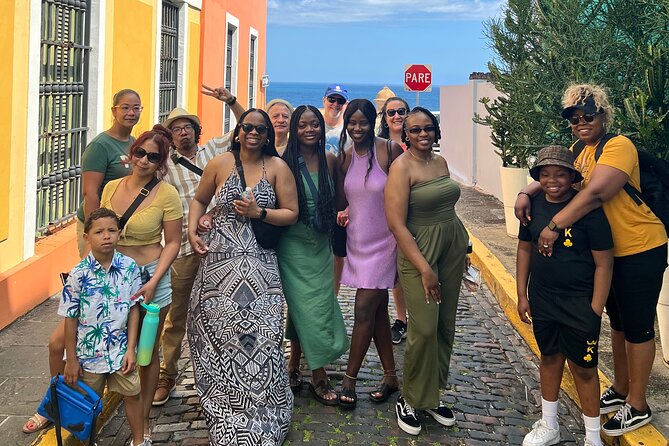
This tour’s strongest feature is the way the guide handles pace and questions. Daniel Rivera Viruet’s style is described as enthusiastic, calm, and attentive, including checking in with the group to make sure everyone is doing OK and pausing to answer questions. That matters on a walking tour, because questions are part of the fun, not a disruption.
Another standout is how the tour respects churches. The rule about entering only when the space is empty or has few people, and never interrupting prayers, keeps the experience smoother and more respectful. It also prevents that frustrating situation where you stop, wait, and then nobody can hear anything.
And for the practical side, the route includes a bathroom stop if available at Cuartel de Ballaja. Old San Juan walking can be longer than you expect, so these built-in moments can make a big difference.
Walking comfort tips so the cobblestones do not win
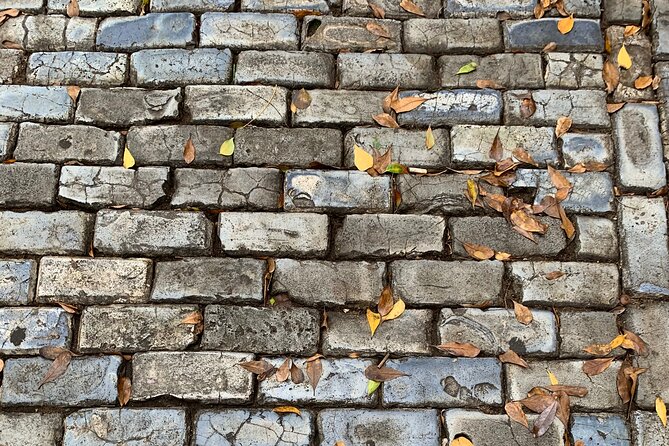
Old San Juan is famous for cobblestone streets, which can feel slow and slippery depending on footwear. The tour is suited to people with moderate physical fitness and it includes a fair number of short stops that still add up. Bring comfortable walking shoes with grip, and consider sun protection. One simple thing like sunscreen can save your afternoon.
Also, keep water in mind. The tour lasts about two hours, but the sun in Puerto Rico can be strong. You’ll be happier if you treat this as a walking plan, not just a sightseeing snack.
Who this Spanish tour is best for
I’d book this if you:
- Want to explore Old San Juan with a guide instead of trying to decode everything on your own
- Prefer a Spanish-only experience at 12:30pm
- Like a small group format, up to 20 people
- Appreciate thoughtful rules, like not interrupting services in churches
You might look elsewhere if you:
- Want long inside time at the big fortresses. This one keeps castle entrances for later optional visits
- Need a fully indoor itinerary. The tour is primarily walking and outdoor viewing
Should you book this tour or skip it?

Book it if your top goal is to learn your way around Old San Juan without spending the whole day on logistics. The $30 price feels fair for a two-hour route that connects walls, gates, churches, forts, and the bay into one coherent walk. The Spanish-only format also makes it a smart pick if you want the city in its own language, and the guide’s attentive style helps the whole experience feel personal rather than rushed.
Skip it only if you already have your own plan for castle interiors and you want long ticketed time inside. Otherwise, this tour is an excellent foundation walk, and it naturally sets you up to keep exploring afterward on Fortaleza Street with a stronger sense of what you are seeing.
FAQ
Is the tour offered only in Spanish?
The 12:30pm Old San Juan tour is in Spanish. If you want the English tour, you have to message before booking to check availability.
What time does the Spanish tour start?
The Spanish tour starts at 12:30pm.
How long is the Old San Juan walking tour?
It lasts about 2 hours.
Where is the meeting point, and does it end nearby?
You meet at 407 C. de San Francisco, San Juan, 00901, Puerto Rico. The activity ends back at the meeting point.
How many people are in the group?
This tour has a maximum of 20 travelers.
Do you enter the castles during the tour?
No. The tour does not enter Castillo de San Cristóbal or Castillo San Felipe del Morro. You can visit them later with their entrance fee.
Are there entrance fees for sites during the tour?
Most stops have free admission tickets for the viewing included in the tour. The castles have entrance fees if you choose to visit them after the tour, and some other sights are described as visitable later with an entrance fee.
Is the tour suitable if I have moderate mobility or fitness?
It is recommended for travelers with a moderate physical fitness level. You should expect walking on cobblestones.
Newly listed in San Juan
- eFoil Lesson Old San Juan★ 5.0 · 5 reviews
- Epic Guided Adventure in El Yunque National Rainforest & Beach★ 4.5 · 456 reviews
- Zipline Adventure Tour★ 4.5 · 103 reviews
- Zipline Canopy Tour with Transport from San Juan★ 4.5 · 47 reviews
- Private Windsurf Experience in Puerto Rico★ 5.0 · 7 reviews
- San Juan – Private Floating Picnic Experience in Condado Lagoon★ 4.5 · 45 reviews
- El Yunque: Waterslide and Plus Beach Round Trip★ 4.0 · 101 reviews
- Private Wellness Tour of Puerto Rico Waterfalls and Hot Springs★ 5.0 · 5 reviews
Old San Juan, compared.

Old San Juan: Segway PT and Segway Xafari Ebike Tours
Read our review →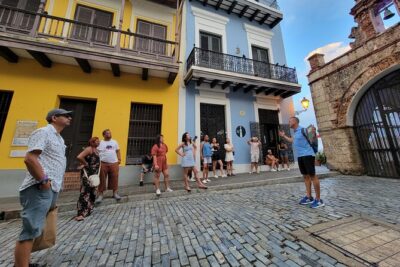

Old San Juan Bar Crawl: Experience Local Hotspots
Read our review →
Savor the Sunset: Old San Juan Walking Food Tour
Read our review →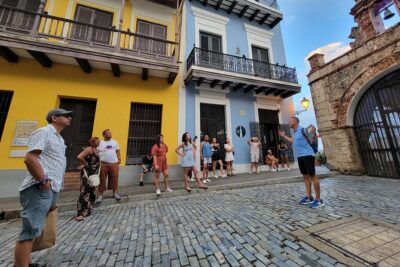

Browse the lists this tour appears in